Why Choose an ASCO Solenoid Valve for Global Sourcing?

Global sourcing is changing how engineers evaluate a solenoid valve. Price still matters. However, reliability, documentation, and local service often matter more after installation. An ASCO solenoid valve offers a strong option for international projects because Emerson supports broad product families, application guidance, and regional distribution. Its valves serve compressed air, water, process control, and hazardous-area applications. That range can simplify specification across multiple factories.

Market data supports this decision. MarketsandMarkets’ Solenoid Valve Market report projects the global market to grow from approximately USD 4.9 billion in 2023 to USD 6.3 billion by 2028. The report links growth to factory automation, energy systems, and process industries. Grand View Research also identifies automation and industrial modernization as important demand drivers. These reports do not prove that one brand fits every project. They do show why purchasing teams need repeatable technical standards.

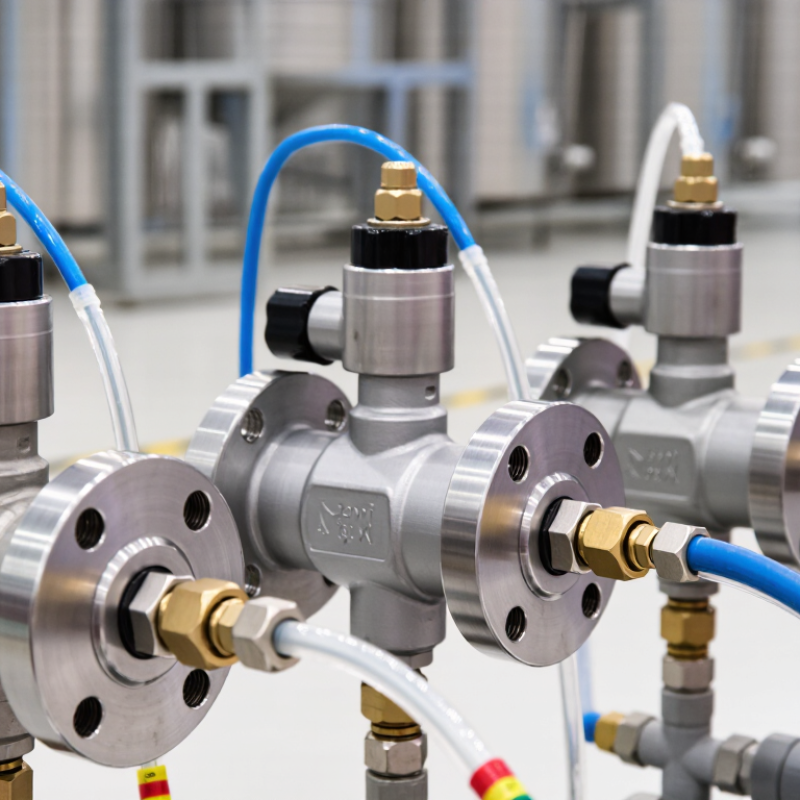
“Valve selection must begin with the application, not the catalog,” says David McCulloch, an Emerson fluid-control specialist. That principle is easy to overlook. A purchasing team may compare unit prices while missing coil voltage, seal compatibility, response time, or certification requirements. A small stainless-steel valve beside a clean pneumatic line reveals these details clearly. Global buyers should verify datasheets, lifecycle expectations, spare-part access, and regional compliance before ordering. ASCO is not automatically the perfect answer. It becomes compelling when engineering discipline, supply continuity, and documented performance are required together.
Why Choose an ASCO Solenoid Valve for Global Sourcing?

ASCO Solenoid Valves: Definition and Operating Principles

A solenoid valve is an electromechanical device that controls fluid or gas flow. Its coil converts electrical energy into a magnetic field. The field lifts or moves a plunger, opening or closing an internal orifice. When power stops, a spring usually returns the plunger to its normal position. This simple action supports fast, repeatable control in water, air, fuel, and process systems.

Normally closed models open when energized. Normally open models close when energized. Direct-acting valves work without pressure difference, while pilot-operated designs require sufficient inlet pressure. The distinction matters during low-pressure operation.

A 24 VDC coil is common in industrial control panels because it limits shock exposure and integrates with automation equipment. According to a 2024 MarketsandMarkets analysis, the global solenoid valve market is projected to grow steadily through 2029, driven by process automation and fluid-control upgrades. Demand alone does not guarantee correct selection.

In field commissioning, technicians should check media compatibility, pressure range, response time, seal material, and duty cycle. A valve may fit the pipe perfectly yet fail early if the coil overheats. Small details matter. Incorrect flow direction can cause unstable operation or noisy chatter.

Pilot-operated units may also remain closed when pressure is too low, a limitation often missed in catalog comparisons. Independent testing against applicable IEC and ISO requirements improves confidence, but installation records and routine inspection remain essential. Even experienced teams can overlook temperature changes around a crowded control cabinet. That weakness deserves review.

Key Features of ASCO Solenoid Valve Products

For global sourcing, solenoid valve performance depends on practical product details. A compact valve can control air, water, or compatible gases within automated equipment. Direct-acting models respond quickly at low flow rates. Pilot-operated models handle larger flows with less electrical power. The correct choice depends on pressure, temperature, media, and cycle frequency.

Small details matter. Check the connection size, port design, coil voltage, and response time. Sealing materials should match the working media and temperature range. Stainless steel bodies can support demanding environments, while engineered polymers may reduce weight and cost. Enclosure protection also matters near washdown areas or dusty production lines. Verify local electrical requirements before ordering.

Fit matters most.

Reliable products should provide clear technical drawings, tested flow data, and traceable batch information. Ask for pressure-test records when the application is critical. In my experience, mismatched voltage causes avoidable downtime, even when the valve itself is well made. I have also seen installation space overlooked; a replacement valve may meet specifications but fail to fit the existing manifold. Global purchasing needs more than a low unit price. Spare coils, consistent dimensions, documentation, and responsive technical support can reduce delays across different facilities. Some specifications still require review after field testing. That step is easy to skip.

Applications Across Global Industrial Markets

In global industrial markets, a dependable solenoid valve must fit real operating conditions, not only a catalog specification. In food-processing plants, valves control filtered water, compressed air, steam, and cleaning circuits near stainless-steel equipment. A small leak can increase waste and interrupt a scheduled production run. In packaging lines, fast switching supports pneumatic actuators, reject mechanisms, and labeling systems. Response time matters, but maintenance access matters more than many design teams expect. That lesson is easy to miss.

In water treatment, valves manage dosing skids, filtration backwash, and air-driven controls. In chemical processing, engineers verify seal materials against temperature and fluid composition before approving a purchase. Pharmaceutical environments may require cleanability, detailed documentation, and controlled assembly. Regional voltage differences, thread standards, and certification requirements also affect installation. A globally sourced valve is useful only when its configuration matches the local panel and piping.

In HVAC systems, solenoid valves regulate refrigerant or water circuits. Agricultural equipment uses them for irrigation zones. Mining and heavy manufacturing demand dust resistance, robust coils, and stable performance under vibration. Field experience suggests that failures often begin with overlooked details, including voltage drop, contaminated air, incorrect orientation, or an undersized orifice. No selection is perfect. Pilot testing with actual media and cycle rates can reveal weaknesses before a full rollout. Keep spare coils and seals where downtime is expensive. This practical step is often ignored.

Why Choose an ASCO Solenoid Valve for Global Sourcing?

Applications Across Global Industrial Markets

Fluid-control equipment supports a wide range of industrial applications, including irrigation, water treatment, process manufacturing, utilities, and facility systems. Agriculture accounts for approximately 69% of global freshwater withdrawals, industry for 19%, and municipal use for 12%. These sector shares demonstrate the broad need for reliable, compact, and easily integrated fluid-control solutions.

Source: FAO AQUASTAT and UN-Water global estimates; figures are rounded global shares.

How to Evaluate ASCO Valves for International Sourcing

When evaluating an industrial solenoid valve for international sourcing, start with operating conditions, not catalog appearance. Confirm the media, pressure range, temperature, flow direction, response time, and duty cycle. A 24-volt DC coil may suit one plant but fail another site’s control system. Small details matter.

The U.S. Department of Energy reports that compressed-air leaks can waste 20–30% of compressor output. This makes sealing quality, response stability, and maintenance access important purchasing criteria. Request pressure-test records, coil-temperature data, material declarations, and traceable batch information. ISO 4414 also stresses safe pneumatic design, including controlled exhaust and protection against unexpected movement. Certification helps, but it does not replace application testing.

For global sourcing, compare the complete landed cost. Include tooling, freight, customs handling, spare coils, connectors, and expected replacement intervals. Verify conformity documents for the destination market, such as electrical safety and ingress-protection evidence. An IP rating alone does not prove chemical resistance. Ask for samples from production batches, not only laboratory units. Test them at the real voltage, pressure, and ambient temperature. Reports are useful. Field evidence is stronger. One weakness remains: suppliers may provide excellent documents while offering limited after-sales support. Evaluate response times, multilingual manuals, warranty terms, and local inventory before approving the purchase.

Selection, Compliance, and Supply Considerations

Global sourcing begins with correct valve selection, not the lowest quoted price. Confirm the fluid, pressure range, temperature, port size, flow coefficient, duty cycle, and coil voltage. Material compatibility matters when moisture, oils, or cleaning chemicals are present. A stainless-steel body may improve service life, but it can raise cost and delivery risk. Not just price.

The International Federation of Robotics reported 541,302 industrial robots were installed worldwide in 2023, a 10% annual increase. This growth increases demand for dependable pneumatic control components. Select valves with documented performance tests, stable switching times, and clear pressure ratings. Check ingress protection under IEC 60529, electromagnetic compatibility requirements, and applicable safety documentation. For export markets, verify conformity records, restricted-substance declarations, and traceable batch certificates. “Compliant” should never be accepted without evidence.

Supply planning needs equal attention. UNCTAD reports that maritime transport carries over 80% of global merchandise trade by volume. Port delays can therefore affect even small replacement parts. Ask for realistic lead times, safety-stock recommendations, alternate seal materials, and regional service options. Confirm harmonized tariff codes and country-of-origin documents before purchase. One weak assumption remains: a technically suitable valve may still fail operationally if spare coils are unavailable. Pilot testing under actual temperature and switching frequency is wiser than relying only on catalog figures.

Why Choose an ASCO Solenoid Valve for Global Sourcing? - Selection, Compliance, and Supply Considerations
Evaluation Dimension Selection Criterion Practical Benchmark or Data Point Recommended Sourcing Evidence Risk Control
Application Fit Medium compatibility Confirm whether the valve is intended for air, water, inert gas, steam, fuel, refrigerant, or another medium. Seal and body materials must be compatible with the fluid, concentration, pressure, and temperature.
  • Fluid compatibility chart
  • Material specification for body, seal, and internal parts
  • Safety data for the process medium where applicable
Do not substitute a valve based only on port size. Chemical compatibility and seal selection can determine service life.
Flow Performance Flow coefficient and response Compare Cv or Kv values at the intended pressure differential. A higher flow coefficient generally allows more flow at the same pressure drop, but it does not replace system sizing.
  • Published Cv or Kv data
  • Pressure-drop curves
  • Opening and closing response specifications
Request calculations for minimum and maximum flow conditions to reduce undersizing, noise, and unstable operation.
Pressure Range Operating and differential pressure Check minimum operating pressure, maximum working pressure, and maximum differential pressure. Direct-acting designs can operate at zero differential pressure, while pilot-operated designs may require a pressure differential.
  • Pressure rating by valve configuration
  • Minimum and maximum differential pressure
  • Pressure test documentation
Select the pressure rating for the actual operating range, including start-up, shutdown, surges, and pressure transients.
Temperature Fluid and ambient temperature Verify both fluid-temperature and ambient-temperature limits. The allowable range depends on body material, seal compound, coil insulation, and the selected configuration.
  • Temperature range stated for the complete valve assembly
  • Seal and coil temperature data
  • Installation clearances and heat-dissipation guidance
Avoid using the maximum temperature of one component as the rating of the complete assembly.
Electrical Selection Voltage, frequency, power, and connection Match the coil to the available supply, such as common 24 V DC or 110–120 V AC systems. Confirm voltage tolerance, AC frequency, power consumption, connector type, and duty cycle.
  • Coil nameplate and datasheet
  • Wiring diagram and connector specification
  • Inrush and holding-current information for AC coils
Control voltage variation and incorrect coil replacement with a pre-approved electrical configuration list.
Valve Function 2-way, 3-way, normally closed, or normally open Define the required circuit function, flow path, fail position, and energized state. The fail-safe position should match the process safety assessment.
  • Port-and-function schematic
  • Normally closed or normally open designation
  • Failure-mode and sequence description
Verify the valve state during loss of power, loss of air pressure, and emergency shutdown.
Connection Standard Port size and thread form Identify nominal port size and thread standard before ordering. Common thread systems include ISO 7-1 pipe threads and NPT, but they are not interchangeable without the correct design basis.
  • Dimensional drawing
  • Thread designation and tolerance
  • Mounting and orientation requirements
Use thread gauges or controlled drawings during incoming inspection to prevent leakage and assembly damage.
Materials and Durability Body, seal, and corrosion resistance Brass, stainless steel, engineering polymers, and elastomers provide different levels of corrosion resistance and temperature performance. Material selection should reflect the medium and environment.
  • Bill of materials or material declaration
  • Seal compound identification
  • Corrosion-resistance or environmental test data
For outdoor, washdown, or corrosive environments, specify enclosure protection and material requirements rather than relying on appearance.
Compliance Market-specific regulatory requirements Requirements vary by destination and application. Depending on the market, the project may require CE or UKCA documentation, electrical safety conformity, electromagnetic compatibility assessment, or hazardous-area certification.
  • Declaration of Conformity where applicable
  • Applicable test reports and certificates
  • Technical file references and product labels
Treat certification as configuration-specific. Confirm that the certificate covers the exact coil, enclosure, valve series, and intended zone or category.
Environmental Protection Ingress protection and installation environment Specify the required IP rating for dust and water exposure, along with ambient humidity, vibration, UV exposure, and washdown conditions. The final rating may depend on the connector and installation method.
  • IP test or enclosure documentation
  • Connector and cable-gland specification
  • Installation instructions
Ensure the complete installed assembly—not only the bare coil—meets the required environmental protection level.
Quality Assurance Traceability and inspection A controlled supply program should identify the part number, revision, production batch, inspection status, and change history. Critical applications may require witnessed testing or additional inspection plans.
  • Certificate of conformity
  • Batch or lot traceability
  • Incoming inspection checklist
  • Nonconformance and corrective-action process
Freeze approved configurations and require written notification for changes to materials, dimensions, software, or manufacturing location.
Supply Availability Standard versus configured item Standard catalog configurations are generally easier to source than valves requiring special seals, unusual voltages, hazardous-area options, custom connections, or application-specific testing.
  • Current product configuration list
  • Supplier stock confirmation
  • Manufacturing and replenishment schedule
Maintain an approved alternative only after technical equivalence, compliance, and interchangeability have been verified.
Lead Time Planning and delivery reliability For global projects, use supplier-confirmed lead times rather than generic estimates. Add time for engineering approval, export documentation, customs clearance, and destination delivery.
  • Written quotation validity period
  • Confirmed production and dispatch dates
  • Historical on-time-delivery performance
Set reorder points using demand variability and transport risk; avoid basing safety stock only on average lead time.
Logistics Packaging, shipping, and documentation Solenoid valves should be protected against moisture, impact, contamination, and loose components during transit. Export documents should match the product description, quantity, country of origin, and customs classification.
  • Packing specification
  • Commercial invoice and packing list
  • Country-of-origin information
  • Shipping and delivery terms
Use moisture-resistant packaging for long-distance transport and inspect connectors, threads, seals, and labels on receipt.
Total Cost Total cost of ownership Evaluate purchase price together with coil replacement, seals, energy consumption, maintenance labor, freight, duties, testing, downtime, and inventory carrying cost.
  • Delivered-cost calculation
  • Warranty terms
  • Maintenance and replacement-part pricing
  • Expected service-life assumptions
Compare technically equivalent configurations; the lowest unit price may create higher lifecycle cost if reliability or availability is lower.
After-Sales Support Technical service and spare parts Global sourcing should include access to installation instructions, troubleshooting support, replacement coils, seal kits, and clear warranty procedures.
  • Technical documentation in the required language
  • Spare-parts availability statement
  • Warranty and return-material process
  • Service contact and escalation path
Define response times and spare-part responsibilities in the purchasing agreement for critical production lines.
Global sourcing note: The final valve selection should be approved against the actual medium, pressure, temperature, electrical supply, installation environment, destination-market regulations, and documented configuration. Certification, availability, and lead time should be confirmed for the exact part configuration before purchase.