10 Best Electric Valves for Global Buyers?
Choosing the right electric valves can influence process stability, energy use, maintenance costs, and operator safety. Global buyers often compare more than price. They examine valve materials, actuator torque, pressure ratings, connection types, control signals, and environmental protection. A valve installed beside a hot pump needs different protection from one used indoors on clean water lines.
This guide explores ten electric valves selected for practical international purchasing decisions. Each option is considered through published specifications, application suitability, control compatibility, and manufacturer support. Real project experience shows that small details matter. A slow actuator may disrupt an automated filling line. Poor sealing can create repeated leakage and unnecessary maintenance. Incorrect voltage selection can also damage equipment.
There is no perfect universal ranking. That deserves attention. Different industries require different performance priorities. A food-processing plant may value hygienic materials, while a chemical facility may require stronger corrosion resistance. Buyers should confirm technical data with qualified suppliers and review applicable regional standards before ordering. Independent testing, traceable documentation, warranty terms, and available replacement parts can strengthen purchasing confidence.
The following comparison aims to make technical choices clearer, not to replace engineering judgment. It highlights reliable designs, practical limitations, and useful questions for supplier discussions. Some products may look similar on paper. Their field performance can differ significantly. Check the details carefully.
What Are Electric Valves and How Do They Work?
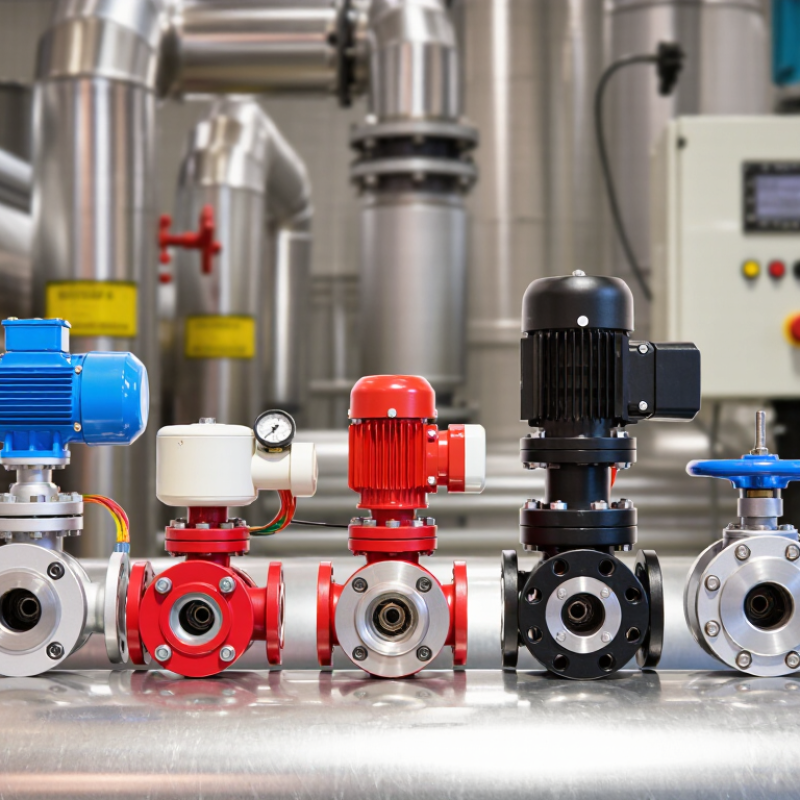
Electric valves control liquid or gas flow through an electrically driven actuator. Unlike manual valves, they respond to signals from controllers, sensors, or building systems. A motor turns the valve stem, moving a ball, disc, or plug into position. Some models offer simple open-or-close movement. Others adjust flow gradually through precise positioning.
During operation, the actuator receives power and a control signal. It then produces torque to move the valve. Position feedback can confirm whether the valve is fully open, closed, or partly adjusted. This matters in water treatment, heating systems, irrigation, and process equipment. A proper selection considers media, pressure, temperature, voltage, connection size, and operating frequency. An oversized actuator may waste energy. An undersized one may stall under pressure.
Tips: Check the fail-safe behavior before purchasing. Some valves remain in their last position during a power loss, while others return to a safer position. Verify local electrical requirements and installation standards. Moisture protection also deserves attention, especially outdoors. Test the valve with real operating conditions when possible. Laboratory performance can look better than field performance. No valve is perfect. Poor wiring, wrong torque, or unsuitable seals can still cause failure. A clear maintenance schedule and accessible manual override make troubleshooting easier for global buyers.
10 Best Electric Valves for Global Buyers? — What Are Electric Valves and How Do They Work?
Electric valves use an actuator to convert electrical energy into mechanical movement, opening,
closing, or positioning the valve. The chart compares common electric valve types by their typical
control function and approximate quarter-turn or linear actuation time. Actual performance varies
with valve size, actuator torque, voltage, pressure, and manufacturer specifications.
Lower actuation time generally supports faster flow isolation, while modulating valves are designed
for precise flow control rather than simple open-or-close operation.
Key Criteria for Comparing Electric Valves Worldwide
10 Best Electric Valves for Global Buyers?
Comparing electric valves worldwide requires more than checking price or flow rate. In field projects, I examine media compatibility, pressure range, operating temperature, response time, and actuator duty cycle. IEC 60529 ingress protection ratings help buyers compare enclosure resistance in dusty or wet facilities. ISO 5211 also supports actuator-to-valve mounting consistency. Small differences matter. A valve exposed to condensation may need IP67 protection, not merely IP65.
IEC 60529 ingress protection ratings help buyers compare enclosure resistance in dusty or wet facilities.
Industry demand is expanding with infrastructure investment. The International Energy Agency’s World Energy Investment 2024 report estimated global energy investment above 3 trillion dollars, with clean-energy investment near 2 trillion dollars. This growth increases demand for reliable flow control in water treatment, battery plants, cooling systems, and power facilities. However, market forecasts can disagree. Buyers should question optimistic projections and request test records, lifecycle data, and spare-part availability. A cheaper valve may create higher downtime costs later.
Tips: Build a weighted scorecard before requesting quotations. Give separate scores for sealing performance, cycle life, energy consumption, certification, delivery time, and local service. Check whether the quoted torque includes safety margins and real operating conditions. Ask for noise data, wiring diagrams, and failure-mode details. Do not compare only nominal diameter. I have seen identical-size valves perform differently because of pressure drop and actuator sizing. No scorecard is perfect. Recheck it after pilot testing.
Electric Valve Types for Different Industrial Applications
10 Best Electric Valves for Global Buyers
Electric Valve Types for Different Industrial Applications
Electric valves control flow with repeatable movement, remote signals, and adjustable timing. The right type depends on the medium, pressure, temperature, and operating frequency.
Match the medium. Motorized ball valves suit clean water, compressed air, and many chemical lines. They provide tight shutoff and quick quarter-turn operation.
Butterfly valves handle large pipe sizes with lower weight and compact installation. They often serve cooling water, ventilation, and irrigation systems.
Gate valves support full-flow pipelines but work poorly for frequent throttling.
Globe valves offer better flow adjustment in steam, fuel, and process systems. Their internal resistance is higher, so energy use deserves attention.
Diaphragm valves protect sensitive fluids from metal contamination. They fit water treatment, pharmaceutical processing, and corrosive services.
Pinch valves can manage slurries, powders, and wastewater containing suspended solids. The flexible sleeve wears over time. Plan replacement access.
Check actuator torque against pressure and valve size. Torque matters. Add a safety margin, but avoid excessive sizing. Oversized actuators may cycle badly and increase cost.
For outdoor plants, verify enclosure protection, cable glands, corrosion resistance, and local electrical requirements. A spring-return actuator may help during power loss, yet it needs careful fail-position planning.
In commissioning work, incorrect wiring and unclear signal standards remain common problems. Do not guess. Confirm voltage, control protocol, duty cycle, manual override, and maintenance space before purchase. No selection is perfect; real operating conditions often expose assumptions made on paper.